 By Nazar Hubert
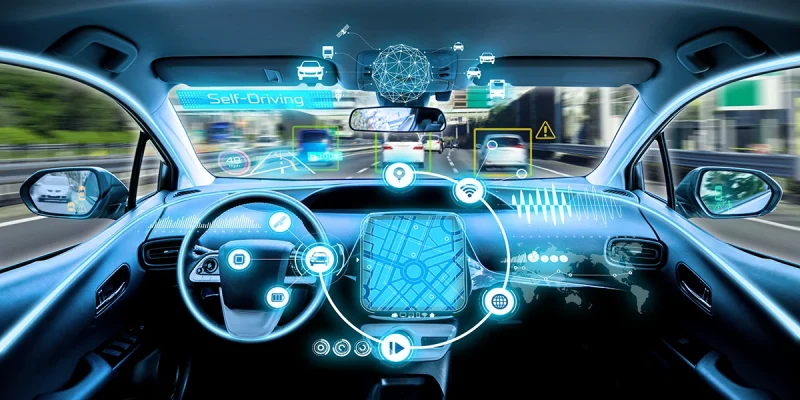
The automotive industry is undergoing a monumental technological shift. Vehicles are no longer purely mechanical machines defined solely by horsepower, transmission ratios, and suspension stiffness. Instead, modern automobiles have transformed into sophisticated computers on wheels, powered by distributed computing architectures, real-time data networks, and artificial intelligence.
These smart vehicles leverage advanced sensors, cloud computing, and automated controls to redefine the daily driving experience. By integrating intelligent technologies across cabin appointments, digital interfaces, and driver-assistance systems, modern vehicles deliver unprecedented levels of personal comfort, seamless communication, and active road safety.
Intelligent Cabin Technologies Elevating Passenger Comfort
Cabin comfort has moved far beyond simple leather upholstery and basic climate dials. Smart vehicles utilize ambient sensor arrays and automated personalization systems to create an adaptive sanctuary tailored to individual passenger needs.
Modern comfort enhancements focus on multi-sensory and ergonomic optimization:
-
Predictive Climate and Air Purification: Intelligent climate systems use infrared thermal sensors to detect the skin temperature of individual passengers, adjusting localized airflow, seat heating, and seat ventilation automatically. Integrated air-quality sensors continuously monitor particulate matter and chemical pollutants outside the cabin, automatically activating high-efficiency filtration and cabin ionization when entering polluted zones.
-
Ergonomic and Active Posture Seating: Advanced smart seats feature pneumatic air chambers and localized massage actuators that adjust continuously during long trips. By subtly altering pressure points, these dynamic seating systems reduce musculoskeletal fatigue and improve blood circulation on extended highway drives.
-
Acoustic Noise Cancellation: Similar to high-end audio headphones, smart vehicles employ active noise cancellation systems. In-cabin microphones capture tire roar, wind resistance, and engine vibrations, prompting the sound system to generate inverted acoustic sound waves through the door speakers that cancel out intrusive cabin drone.
-
Biometric Profile Customization: Using facial recognition cameras or smartphone proximity detection, smart cars identify who enters the driver seat. The vehicle immediately adjusts seat position, side mirrors, digital gauge cluster preferences, steering wheel height, and preferred cabin lighting schemes before the driver shifts into gear.
These subtle adjustments eliminate the friction of manual configuration and insulate passengers from the physical fatigue of long-distance travel.
Seamless Digital Connectivity and the Internet of Things
Smart vehicles function as interconnected digital nodes within the broader Internet of Things ecosystem. High-speed mobile network modems, localized wireless protocols, and cloud computing platforms allow cars to communicate continuously with personal devices, public infrastructure, and other road users.
Key dimensions of smart vehicle connectivity include:
-
Over-the-Air Software Architecture: Automotive manufacturers can continuously update vehicle performance, improve battery management algorithms, install new infotainment features, and patch security vulnerabilities remotely. This capability ensures that a vehicle continually improves its functional capabilities throughout its operational lifespan without requiring dealership visits.
-
Smart Home and Workspace Integration: Drivers can manage connected home devices directly from their dashboard interface or through natural-language voice assistants. From adjusting home thermostats and opening smart garage doors to checking calendar agendas and joining work meetings through cloud-based conferencing tools, the vehicle acts as a natural extension of home and office environments.
-
Cloud-Connected Telematics and Fleet Management: Vehicles continuously transmit operational metrics to mobile applications. Owners can check exact fuel levels, battery state of charge, tire inflation pressures, and mechanical diagnostic alerts from anywhere in the world, in addition to locking doors, tracking vehicle GPS locations, and scheduling maintenance remotely.
-
Integrated In-Vehicle Commerce: Connected vehicles support native payment processing through secure digital wallets stored in the infotainment head unit. Drivers can pay for automated tolling, reserve and purchase parking spaces, and authorize electric vehicle fast-charging sessions directly from the center screen without handling physical credit cards.
By keeping the driver informed, connected, and productive, smart connectivity eliminates daily friction points both on and off the road.
Transforming Road Safety Through Advanced Driver Assistance Systems
While comfort and connectivity enhance the overall travel experience, the most impactful contribution of smart vehicle technology is the dramatic reduction of traffic collisions and road fatalities. Modern safety systems shift the paradigm from passive crash protection, such as airbags and crumple zones, to proactive collision prevention.
Smart safety platforms utilize a sensory suite of optical cameras, millimeter-wave radar units, ultrasonic transducers, and light detection and ranging sensors to form a continuous three-hundred-and-sixty-degree protective shield around the car.
Critical active safety systems include:
-
Autonomous Emergency Braking with Pedestrian Detection: Forward-facing radar and high-resolution cameras track road obstacles, crossing pedestrians, and sudden braking by lead vehicles. If the system calculates an imminent collision and the driver fails to react in time, the car automatically applies maximum hydraulic braking force to mitigate or completely avoid impact.
-
Adaptive Cruise Control with Stop-and-Go Functionality: Using real-time distance calculations, smart vehicles match the speed of preceding traffic, slowing down to a complete stop in heavy congestion and accelerating back to cruising speed when lanes clear, drastically reducing driver fatigue.
-
Lane Centering and Blind Spot Intervention: Optical vision algorithms identify highway lane markers, gently applying torque to the electronic power steering to keep the car centered. If a driver attempts to execute a lane change while a vehicle is detected in the adjacent blind spot, the system warns the driver visually and can apply differential braking to guide the vehicle back to safety.
-
Driver Monitoring and Attention Tracking: Infrared steering-column cameras monitor driver eye gaze, blink rates, and head position. If the system detects cognitive distraction, texting, or microsleep fatigue, it issues audible alarms, seat vibration warnings, and suggestions to pull over for rest.
These intelligent systems process visual and spatial data faster than human reflexes allow, serving as a reliable co-pilot during critical traffic situations.
Cooperative Safety Through Vehicle-to-Everything Communication
The ultimate realization of smart vehicle safety lies in Vehicle-to-Everything communication protocols. This technology enables vehicles to broadcast and receive critical safety data directly with surrounding infrastructure, cyclists, pedestrians, and other vehicles at ultra-low latency.
Through Vehicle-to-Vehicle communication, a car that encounters black ice or initiates an emergency stop on a blind curve can broadcast an instantaneous warning signal to trailing vehicles miles away. This allows approaching cars to slow down well before the hazard comes into the driver line of sight.
Simultaneously, Vehicle-to-Infrastructure communication allows cars to interface with municipal traffic lights, receiving phase-timing data to calculate optimal cruising speeds that reduce stop-and-go congestion, minimize carbon emissions, and alert drivers when a red light violation is about to occur at a blind intersection.
Frequently Asked Questions
How do smart vehicles protect passenger privacy and prevent remote hacking of safety-critical systems?
Automakers implement defense-in-depth cybersecurity architectures that isolate infotainment and telematics networks from mission-critical powertrain and braking controls using hardware security modules and secure gateways. Data transmitted between the vehicle and cloud servers is encrypted with modern cryptographic keys, and vehicle operating systems undergo continuous threat modeling and over-the-air security patching to eliminate potential backdoors.
What happens if weather conditions like heavy snowfall or thick fog block the external sensor suite?
When snow, heavy mud, or dense fog blinds optical cameras or radar lenses, smart vehicles immediately alert the driver with dashboard warnings indicating that specific automated features, such as lane keep assist or adaptive cruise control, are temporarily unavailable. In these scenarios, the vehicle seamlessly hands full manual control back to the driver while keeping basic passive safety functions operational.
How does over-the-air software distribution affect vehicle recall procedures?
For software-related defects, such as powertrain management glitches or infotainment vulnerabilities, automakers can deploy corrective firmware patches over cellular networks directly to the vehicle while it sits parked in the owner driveway. This eliminates the necessity of scheduling physical dealership appointments for software updates, drastically reducing the time required to resolve open safety campaigns.
Can biometric driver monitoring systems operate accurately at night or when drivers wear sunglasses?
Driver monitoring systems utilize near-infrared illumination LEDs and specialized infrared optical sensors mounted on the steering column or rearview mirror assembly. Infrared light operates outside the visible light spectrum, allowing the system to track pupil movement, eyelid position, and facial orientation in total darkness and through polarized sunglass lenses without causing glare for the driver.
How do smart vehicle navigation systems predict charging stops and battery pre-conditioning for electric platforms?
Intelligent electric vehicle navigation systems analyze real-time route elevation, ambient weather temperatures, driving speed, cabin climate power draw, and live charging station availability. The system calculates the most efficient charging stops along the route and automatically initiates thermal pre-conditioning of the high-voltage battery pack prior to arrival, ensuring the battery achieves peak fast-charging speeds the moment it is plugged in.
What is the functional difference between driver-assist technologies and fully autonomous driving systems?
Driver-assist systems require the human driver to remain fully attentive, monitor the road environment continuously, and maintain legal responsibility for vehicle control at all times, with their hands on or near the wheel. Fully autonomous systems, by contrast, assume complete operational control of all dynamic driving tasks under defined operational design domains, allowing occupants to disengage attention without assuming liability for collision management.
What is your reaction?
Excited
0
Happy
0
In Love
0
Not Sure
0
Silly
0