 By Nazar Hubert
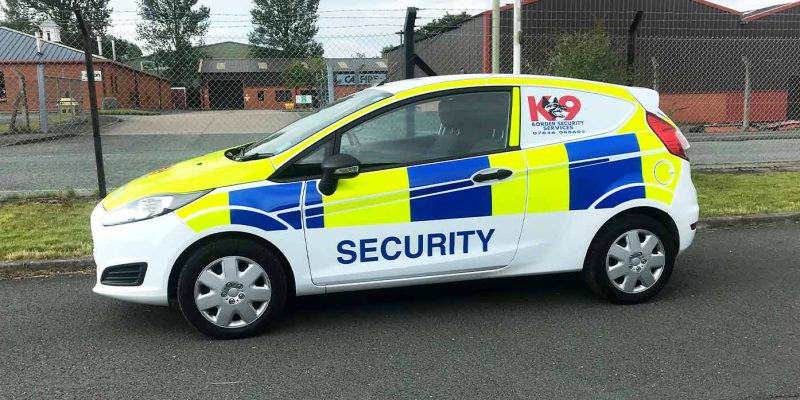
K-9 unit vehicles have a way of drawing attention unlike any other emergency vehicle. Kids point at it from the sidewalk, citizens may stop to chat about the dog with officers, and the community knows that vehicle. A big part of that recognition comes down to the police car graphics.
Are you currently designing or planning to refresh the wraps on your K-9 unit vehicles? Then don’t miss reading about the considerations that don’t apply to a standard patrol car—that’s what we’ll cover today.
The handler vehicle has unique equipment, distinct safety needs, and a tradition of partnership that often shows up in its design. So, keep reading to find out more about what makes K-9 unit vehicle graphics different, the most common design elements, and the practical details to keep in mind before installation.
The K-9 Vehicle Is Usually a Different Platform
Most K-9 unit vehicles are SUVs. Departments typically use platforms like the Chevrolet Tahoe, Ford Explorer, Dodge Durango, or Ford Expedition because the dog needs cargo space, climate control, and a custom kennel insert. That platform shapes the design.
A bigger surface area gives your graphic designer more room to work with, especially along the rear quarter and tailgate. It also means the design has to account for things a sedan wouldn’t, like cargo-area glass, rear-hatch graphics, and integration with the kennel system that’s visible through the windows.
6 Common Design Elements on K-9 Vehicle Graphics
Every department has its own style, but certain design elements show up on K-9 unit vehicles across the country.
Six of the most common design elements you’ll notice on K-9 units include:
- K-9 unit identifier: A clear “K-9 Unit” or “K-9 Officer” decal somewhere on the vehicle, often on the rear quarter, the rear hatch, or the front fender. This is usually the second-largest piece of lettering after “Sheriff” or “Police.”
- Paw prints: Either as standalone graphics or worked into the striping, paw prints are one of the most recognizable visual cues on a K-9 vehicle.
- Dog silhouettes: Many departments include a silhouette of a working dog, often a German Shepherd, Belgian Malinois, or Dutch Shepherd, depending on the breed used.
- K-9 badge: A specialty badge design that incorporates a dog or paw print into the department’s standard shield.
- Partner names: The handler’s name and the K-9’s name often appear together, frequently on the front fender or rear quarter. Some departments display them as a partnership pairing, like “Deputy Smith and K-9 Rex.”
- Service motto: Phrases like “Serve and Protect,” “Sworn to Serve,” or department-specific mottos sometimes appear alongside the K-9 markings.
3 Safety Decals Specific to K-9 Vehicles
K-9 unit vehicles need certain safety markings that standard patrol cars don’t. These are functional decals that protect the dog, the public, and the handler.
Heat Alarm and Climate Control Decals
Most modern K-9 vehicles are equipped with heat alarm systems that monitor cabin temperature when the dog is left in the vehicle. See how one county sheriff’s office has implemented an advanced heat detection system for their K-9 fleet here.
Many departments add a clearly visible decal on the rear windows alerting the public that the vehicle is climate-controlled and equipped with a heat alarm. This prevents well-meaning bystanders from breaking windows during routine stops.
Caution and Warning Decals
A “Caution: Police K-9” or “Police K-9, Do Not Approach” decal is standard near the cargo area windows. These warn anyone approaching the vehicle that a working dog is inside.
Ventilation Considerations
K-9 vehicles typically have aftermarket ventilation fans installed in the rear windows or roof. Your graphic designer needs to know where these are located so the wrap works around them without blocking airflow or covering hardware.
Partner Naming and Tribute Traditions
The naming tradition is one of the things that makes K-9 vehicle graphics distinct. The dog is treated as a sworn member of the department, and the vehicle reflects that.
When a K-9 officer retires or passes away, many departments add an “In Memory of K-9 [Name]” decal to a successor vehicle, or they preserve the original vehicle’s naming for ceremonial use.
If your department is planning a tribute design, it’s worth deciding early how to handle naming continuity, especially if the handler will be partnered with a new dog later in their career.
Sponsor Recognition
Many K-9 programs receive funding from community donations, foundation grants, or local business sponsorships. If a sponsor helped fund the dog, the training, or the vehicle itself, departments often choose to include a recognition decal on the rear quarter or tailgate. This is usually a small, tasteful addition that acknowledges the contribution without overwhelming the rest of the design.
If you go this route, work with your graphic design partner to keep the sponsor decal visually consistent with the rest of the wrap. If the font or color is mismatched, the recognition might feel more like an afterthought than an intentional design.
Frequently Asked Questions About K-9 Vehicle Graphics
Still have questions about K-9 vehicle graphics? We’ve covered some FAQs below to offer you the information you’re looking for.
Can my K-9 vehicle still operate as a ghost vehicle?
Yes. Some departments use subdued or low-contrast graphics on their K-9 units, particularly if the vehicle is used for narcotics work or other operations where high visibility isn’t needed. Heat alarm and caution decals can still be applied in reflective vinyl that shows up clearly at night while staying subtle in daylight.
Will the wrap interfere with the kennel ventilation?
Not when it’s installed correctly. Your graphic design team should know exactly where the kennel vents and aftermarket fans are located before any vinyl is cut. The wrap is then designed to work around those features. This is partly why working with graphic designers who have expertise in emergency vehicles is so important.
How often should we update our K-9 vehicle graphics?
The same general timeline applies as with any other emergency vehicle graphic. Most wraps last around five years, though many departments refresh sooner to coincide with a new K-9 partner, a retirement, or a vehicle reassignment. This also heavily depends upon the environment where your fleet operates.
Trust Graphic Designs International for Your K-9 Unit Vehicle Graphics
Your K-9 unit deserves a wrap that honors the partnership and meets the practical needs of the work. From paw prints to partner naming to heat alarm decals, every detail matters when designing for a working dog vehicle!
If you’re ready to design or refresh your K-9 unit vehicle graphics, contact the folks at Graphic Designs International. The team at Graphic Designs International has worked with sheriff and police departments across the country and knows exactly what it takes to get this right.